Summer Survival Tips
How to Protect your Hair and Scalp this Summer
How summer affects hair: the good and the bad
The start of summer means longer, warmer days and more time outdoors, but the season's elements can take a toll on hair and scalp.
The winter months can deplete the body's Vitamin D levels, which can trigger excessive hair shedding, fatigue and low mood. Summer sunlight helps the body synthesise Vitamin D and can lift mood, which in some people reduces the stress-related shedding they experienced over winter.
The good news stops there, however. Hair can burn in the same way skin does, the difference being you can't feel it happening. The extent of the damage depends on how long you spend in the sun and the intensity of UV exposure; time spent by water increases this further, since rays reflect off the surface and effectively double exposure.
How quickly does sun damage happen, and what does it look like?
As soon as hair is exposed to strong sun, its protein structure starts to change, and the longer the exposure, the more pronounced the damage. Combine UV rays with salt water, chlorine and wind, and hair can end up in poor condition surprisingly quickly.
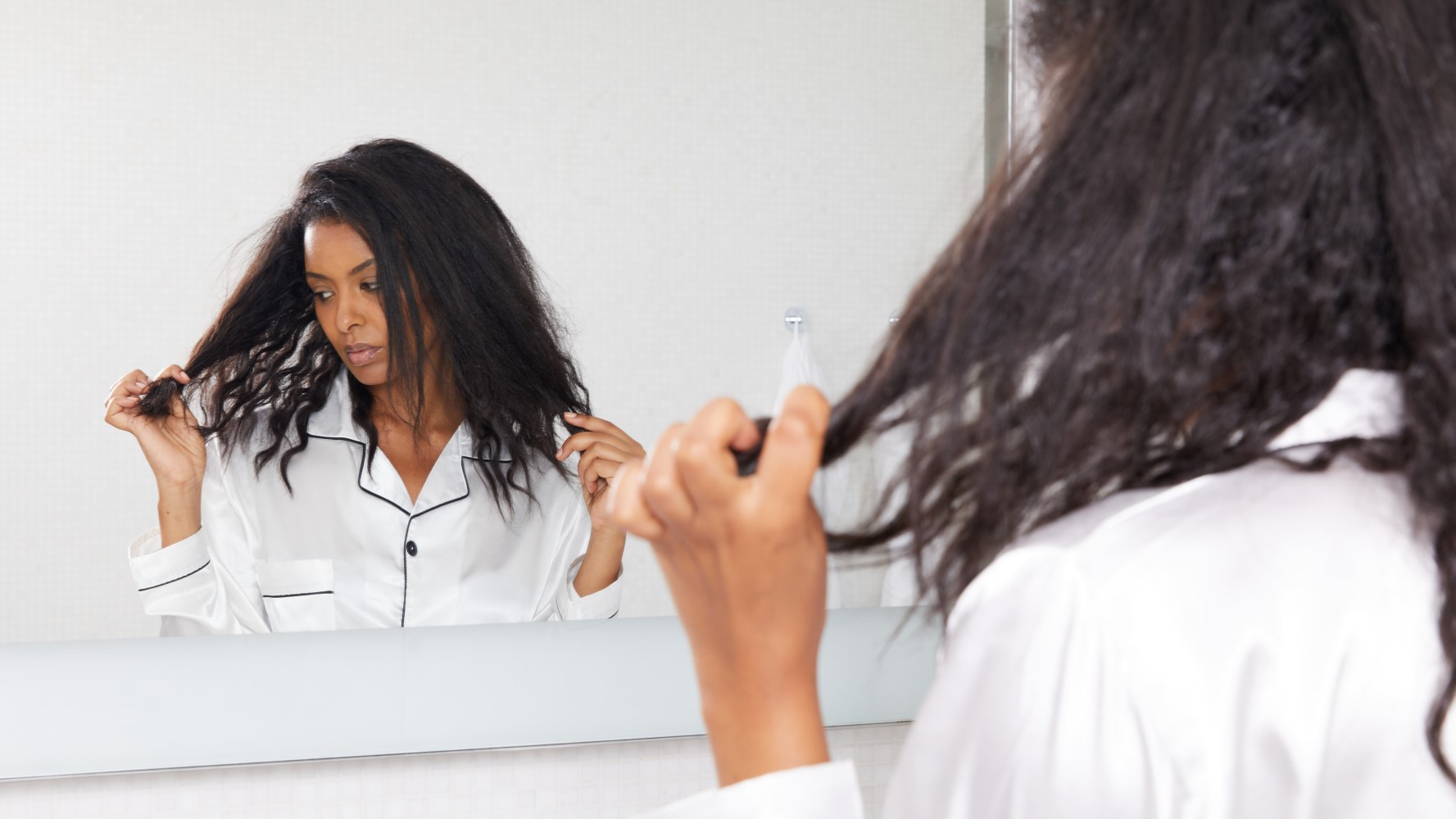
Sun-damaged hair behaves much like hair damaged by bleach or other chemical processing: it tends to be dry and brittle, lacking elasticity and shine. It may also be harder to manage, less able to hold a curl, prone to tangling, and progressively lighter in colour.
How to protect your hair and scalp in the sun
The scalp can burn just as skin does, so protecting the parting matters, particularly if you have thinning hair and more scalp on show. A simple trick: apply sun protection cream to a cotton bud and run it directly along the parting.
To protect hair without disturbing your style, spritz Daily Damage Defense Conditioning Spray all over before heading out. The lightweight, invisible spray helps fight frizz while guarding against colour fade, dryness and damage caused by UV rays, chlorine and salt water. For extra protection in the water, Swimcap helps stop discolouration while deeply conditioning the hair.
What to do if your scalp does burn?
Just as you'd apply an aftersun to the body, the After-Sun Scalp Mask can be applied to the scalp to soothe and hydrate the skin. Enriched with Aloe Vera and Chamomile, it delivers relief and rehydrates skin to help prevent redness, flaking and irritation. It's worth using year-round, not just after a burn, to keep the scalp in the best condition for healthy hair growth.
Styling tips to reduce summer damage
Summer is a good time to put down the heat stylers and let hair air-dry, reducing the cumulative damage that high heat causes. Tousled beach waves are one of the most coveted summer looks, and while a dip in the ocean is one way to get there, salt water draws moisture out of hair and can leave it dry, tangled and brittle.
FAQ additions
Yes. UV exposure changes the protein structure of the hair shaft in the same way it affects skin, you simply can't feel the damage happening in the moment. The longer and more intense the exposure, the more pronounced the effect.
Sun-damaged hair typically feels dry and brittle, loses elasticity and shine, tangles more easily, holds a curl less well and can appear progressively lighter in colour over the season.