

The Different Types Of Hair Colouring
The Different Types Of Hair Colouring, Explained
Written by Philip Kingsley trichologist, Ross Clubb.
When choosing a hair colourant, it isn't always obvious which type you're being offered, or how long the result will last. Colourants fall into three broad categories: temporary, semi-permanent and permanent (oxidative), and knowing the difference helps you set realistic expectations before you sit in the chair.
Temporary hair colour
Temporary colour sits on the hair surface rather than penetrating the cuticle, which is why it washes out easily, usually after a single shampoo. It doesn't need to be mixed with a developer or any other component, which makes it the lowest-commitment option for a short-term colour change.
Semi-permanent hair colour
Semi-permanent colour comes ready to use straight from the bottle, again without mixing. It settles within the cuticle scales of the hair rather than just the surface, which is why it lasts longer, typically between 6 and 10 washes, before fading out.
Permanent (oxidative) hair colour
These are known as oxidative colours. They are where at least two components, known as the colourant and the oxidiser (usually hydrogen peroxide) are mixed together immediately before use and give either a 'tone on tone' result (also known as demi-permanent) that lasts up to 24 washes or a oxidative colour that does not wash out.
Permanent colours are also known as oxidative colours. At least two components are mixed together immediately before use: the colourant itself, and an oxidiser (usually hydrogen peroxide). This combination gives one of two results: a tone-on-tone, or demi-permanent, colour that lasts up to 24 washes, or a fully oxidative colour that doesn't wash out at all.
Tone-on-tone colourants can deepen or enhance existing colour but cannot lighten the original pigment. The oxidising agent creates colour molecules large enough to become trapped within the hair's cortex, which is why the result resists washing and also provides good coverage on white hair.
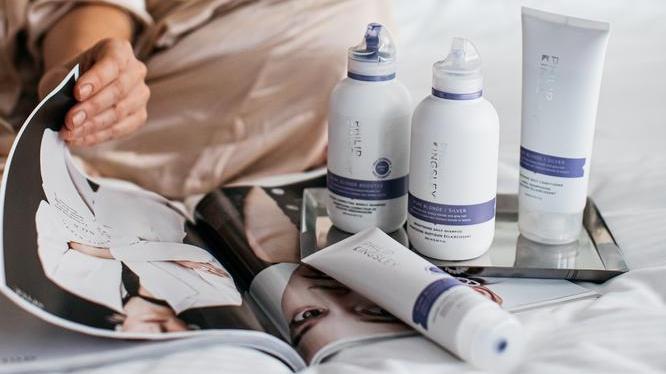
Shop our colour protecting range.
Oxidative vs non-oxidative hair colour: what's the difference
The key distinction is whether the colourant is mixed with an oxidiser before application. Non-oxidative colours, which cover both temporary and semi-permanent formulas, simply coat or lightly settle into the hair without any chemical reaction, so they fade out over a set number of washes. Oxidative colours undergo a chemical reaction with a developer that changes the hair's internal pigment structure, which is why they last far longer and can also lighten hair, not just deposit colour onto it.